European Commission confirms cyberattack after hackers claim data breach

The European Commission has confirmed a data breach after its Europa.eu web site was hacked in a cyberattack claimed by the ShinyHunters data extortion group. This was first reported on March 26, 2026.

The EC stated that “the Commission’s internal systems were not affected by the cyber-attack”.

The threat actor claimed that they stole over 350 GB of data, and they released 90 GB of data.

Read more about it here.

Anthropic accidentally leaks its own source code

Anthropic accidentally leaked the source code of its Claude Code tool, after a large debug file was included in a public npm release. A 59.8 MB JavaScript source map file (.map), intended for internal debugging, was inadvertently included in version 2.1.88 of the @anthropic-ai/claude-code package on the public npm registry pushed live on March 31, 2026.

The file exposed 1,900 TypeScript files, consisting of more than 512,000 lines of code, full libraries of slash commands and built-in tools. Once flagged online, the code was quickly shared and analyzed by developers.

The leaked source reveals a sophisticated, three-layer memory architecture that moves away from traditional “store-everything” retrieval.

Read more about it here.

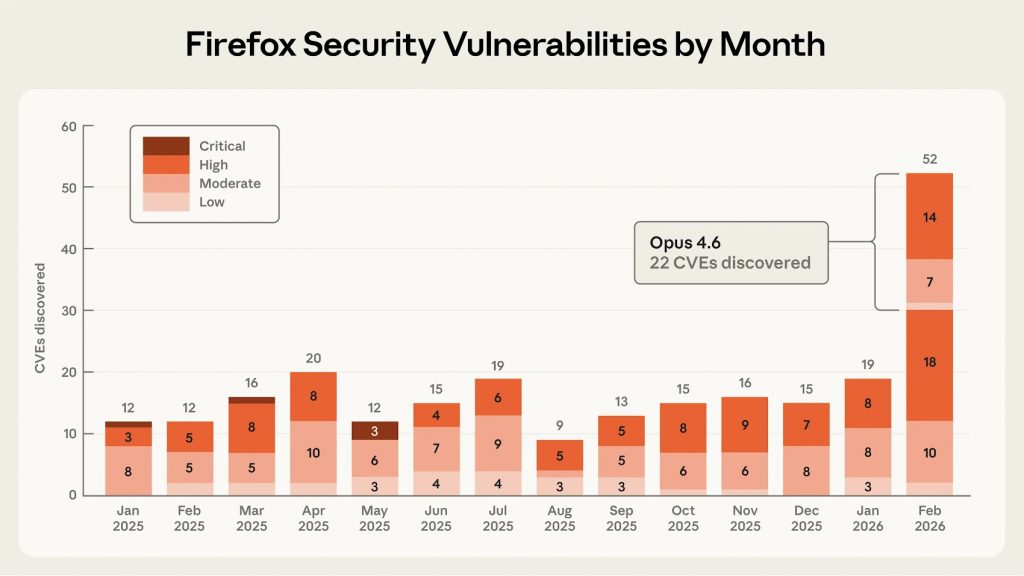
Anthropic Claude Opus 4.6 AI Model Finds 22 Firefox Vulnerabilities

Anthropic said on March 6, 2026 it discovered during a two week period in January 2026 22 new security vulnerabilities in the Firefox web browser as part of a security partnership with Mozilla. It was using the Claude Opus 4.6 AI model. Of these, 14 were classified as high, 7 were classified as moderate, and 1 was rated low in severity. The issues were addressed in Firefox 148, released in late February 2026.

Claude identified a Use After Free vulnerability, which the team validated and reported to Mozilla along with a proposed patch written by Claude. By the end of this effort, Claude scanned nearly 6,000 C++ files and submitted a total of 112 unique reports, including the high- and moderate-severity vulnerabilities mentioned above. Most issues have been fixed in Firefox 148, with the remainder to be fixed in upcoming releases.

Read more about it here.